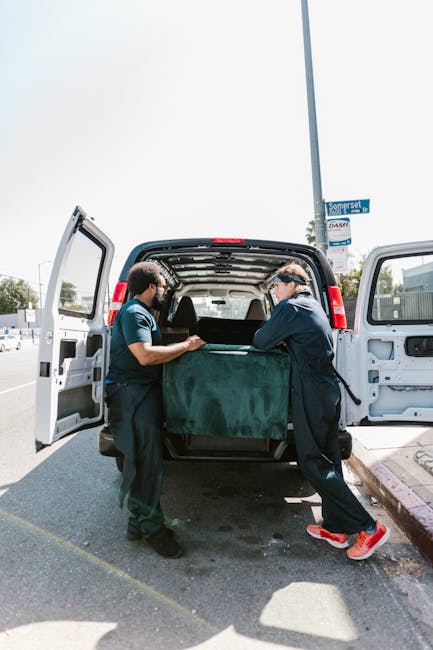
Man with Van in Kennington

Our man with van in Kennington service is built for practical moving jobs that need careful loading, sensible route planning and steady handling of furniture, boxes and household items. It suits people moving between flats, delivering a few bulky items, or shifting contents from one address to another without the scale of a full removals crew. We keep the work focused, orderly and appropriate to the load, with the aim of making each move straightforward from first enquiry through to delivery.
Rather than forcing every job into the same format, we shape the service around the task in hand. That may mean a single-item collection, a small flat move, or support with heavier pieces that need two-person handling. Man with van service details explain the core moving option, while related pages cover fuller household and commercial work for customers who need a broader scope.
Use this page to understand how the service works, what kinds of move it suits and which related options may be useful if your plan involves packing help, storage or a larger property move. If you already know what needs moving, you can request a quotation once you have the essentials together. For many customers, a clear list of items and the collection and delivery postcodes is enough to start a useful conversation. Simple, accurate information helps us match the right van, access approach and loading time to the job.
Household moves handled with care
Household jobs often need more than transport alone. Sofas, tables, drawers, beds and packed boxes may all need to be carried through narrow hallways, stairwells or shared entrances before they ever reach the vehicle. Our service is arranged to manage that process in a calm, practical way, with attention to how items are lifted, stacked and secured. When the job is a smaller home move, the value is in keeping things organised rather than overcomplicated.
For fuller domestic removals, the right option depends on the volume, the layout of the property and whether the items are already boxed or still in use. Some customers only need help taking a few pieces to a new address. Others need a more complete home move with enough vehicle space for a larger load. Home moves provide a broader domestic moving route, while flat removals are useful where stair access, lifts and shared spaces make planning especially important.
We can also help when the move sits somewhere between a small collection and a standard house removal. In those cases, the key decision is usually how much assistance you want on the day. Some people need transport only; others want loading support, careful placement at delivery and a single point of contact for the job. House removals cover the more complete side of domestic moving, and house removalists may suit customers seeking a fuller household moving service.
Furniture collections and individual items

Not every booking is a full move. A man and van setup is often a sensible choice for furniture that is too large for a car but too modest for a dedicated removal lorry. That can include beds, wardrobes, bookcases, white goods, office chairs and other heavy pieces that need secure handling and a vehicle with enough loading space. The service is also practical for shop collections or private purchases where the item has to be moved promptly and with care.
For standalone items, the main concern is usually access rather than distance. If a sofa must be carried from an upstairs room, or a dining table needs protection while being moved through a narrow entrance, the job may benefit from the sort of careful loading associated with furniture removals. Where the task is simply to collect and deliver one item or a small group of pieces, furniture pick-up offers a straightforward description of that type of work.
Useful details for this kind of booking are often simple: the item type, approximate size, floor level at both ends and whether there are any awkward access points such as tight turns or shared corridors. With that information, the move can be planned so that the vehicle size and load order make sense. A clear description also helps avoid unnecessary delays when the item needs to be handled safely from door to van and then into its final position.
Packing support, storage and moving preparation
Some customers want more than transport on the day. When items need to be boxed, wrapped or organised before they travel, packing support can make the move feel much more manageable. It may involve supplying materials, helping with the order in which items are packed or making sure delicate belongings are protected before loading begins. The right level of help depends on whether the work is a simple pickup, a room-to-room move or a complete domestic relocation.
Where a move cannot be completed in one journey, storage may be part of the plan. That can be useful during staggered completions, refurbishment work or when access dates do not line up neatly. Packing and boxes is the clearest place to look for packing-related support, while Storage is relevant if the move needs a temporary holding solution before final delivery. Packing and unpacking services are useful when you want help at both ends rather than handling the box work alone.
When preparing for any move, a short written list is often enough to start. Include the type of items, how many rooms are involved, whether anything is fragile or unusually heavy and whether parking or entry access may affect loading. You do not need to overstate the job; the point is to describe it accurately. If you are ready to compare options, pricing and quotes gives a direct route to discussing the work in a clear, practical way.
Office and commercial moving support

Business moves need organisation as much as transport. Desks, chairs, filing units, IT equipment and boxed paperwork all have to be managed in the right order so that the relocation causes as little disruption as possible. A van-based moving service can be a sensible fit for smaller offices, start-up spaces and straightforward commercial transfers where the load does not justify a large removal team. The emphasis is on keeping items together, moving them efficiently and delivering them in workable condition.
For larger or more structured business relocations, it helps to choose the page that reflects the scale of the work. Office removals suit teams that need a fuller moving arrangement, while Office relocation services describe a broader commercial move with a stronger planning element. If your organisation is moving equipment, archives or furniture between sites, the route you choose should match both the amount of stock and the level of coordination required.
Commercial customers often want a move that is efficient but still carefully controlled. That may mean moving some items first, leaving others until a later collection or ensuring that sensitive equipment is kept separate from general furniture. The most useful starting point is a concise inventory and a clear idea of the delivery sequence. If the job is simple, the service stays simple; if the load is more complex, the moving plan should reflect that rather than forcing everything into one standard arrangement.
Specialist and larger-item moves
Some belongings need specific handling because they are awkward, heavy or easily damaged if lifted in the wrong way. Specialist items can include pianos, exercise equipment, oversized cabinets and objects that do not fit neatly into an ordinary load. A man with van approach may still be appropriate, but only when the equipment and handling method suit the item. The point is to balance practicality with caution so that the move is completed without unnecessary risk.
Where a particularly heavy or delicate item is involved, the most relevant service page should match the task precisely. Piano removals are the clearest example of a specialist move that needs more than ordinary lifting, while Moving truck and Removal van pages are useful if you are comparing vehicle-based options for a larger load. For standard moving support, the general removal services page is a good overview of the wider range.
If your item is part of a mixed load, mention it early. A move that contains one awkward object and several ordinary boxes may need a different loading sequence from a furniture-only job. Keep the description honest and specific so that the chosen arrangement reflects the real requirements. That helps avoid rushing on the day and makes it easier to place each item where it belongs when the delivery is complete.
About Kennington
Kennington is a district in south London, lying mainly within the London Borough of Lambeth and partly within the London Borough of Southwark. It sits close to the River Thames and is known for its mixture of residential streets, civic spaces and long-established local landmarks. The area’s layout reflects centuries of change, from its earlier history as a manor and village outside the old London core to its later development as an urban neighbourhood connected to the expanding city. Streets here range from formal Georgian terraces to later housing and mixed-use buildings, giving the district a varied built character rather than a single uniform style. One of the best-known open spaces is Kennington Park, which occupies land with a strong historical association and provides a large patch of greenery in a busy inner-London setting. The nearby Oval cricket ground adds a distinctive sporting identity, while transport connections and local high streets link the district to wider south London life. Churches, terraces and Victorian frontages sit alongside newer development, and that combination helps explain why the area feels both settled and continuously changing. Kennington’s position between central London and the inner suburbs has made it a place of movement for a long time, and its streets, gardens and public buildings still reflect that layered history. The result is an urban area with a recognisable local character, a strong sense of place and a built environment shaped by both heritage and practical city living.
When a small move is the right fit

A smaller booking is often the most efficient choice when you do not need a full removals operation. That might be a bedsit move, a student clear-out, a few pieces of furniture bought privately or the transport of boxed belongings between addresses. The advantage is flexibility: you can match the vehicle and handling to the actual job instead of paying for unnecessary capacity. For many customers, that makes the move feel more manageable from the start.
The service can also be useful for short-notice changes in plan, provided the load is realistic and the route can be agreed clearly. If the move involves a lighter load but a tight timetable, same-day removals may be the nearest relevant page, while student removals suit moves with fewer belongings and a more compact schedule. These pages help distinguish between a basic van job and a more structured moving arrangement.
For customers who are comparing options, it often helps to think in practical terms: what needs moving, how fragile it is, and whether the destination has stairs, parking limits or a loading bay. A small move does not need a complicated explanation, but it does benefit from clear facts. If you are already at that stage, make a note of the items, pick the service that best fits the load and move on to the quotation step with confidence.
Choosing the right moving support
The best option depends on the balance between volume, access and the amount of help you want. Some people only need transport and loading space. Others need a more complete move that includes heavier lifting, careful packing or delivery to more than one location. Choosing the right page and service type is less about labels and more about matching the moving setup to the real job in front of you.
It can help to compare the wider range before you decide. Removal companies gives a general comparison point for customers weighing up different kinds of provider, while Removals is a broader route for customers who want to see the full range of moving support together. If the work is straightforward, the van-based option may be all you need; if it is larger, you may prefer a fuller service built around your timetable and item list.
- Identify the items that must travel.
- Note any awkward access, stairs or parking issues.
- Decide whether you need loading help, packing support or storage.
- Choose the page that best matches the scale of the move.
- Request a quotation with clear details.
Request a quotation

When you are ready to move from planning to booking, the simplest quotation is usually the most useful. Give the item list, collection and delivery areas, any access restrictions and the preferred date or time window. That is enough for a practical assessment of the work and helps avoid vague assumptions. If the job is still evolving, say so clearly rather than guessing at the final load.
For customers who want to discuss numbers and scope in one place, Contact us is the natural next step, and Pricing and quotes can help frame the enquiry before you send it. Keep the request brief but complete, and include any details that affect loading, transit or delivery. The more accurate the initial description, the easier it is to match the move to the right level of support.
If you need a man with van in Kennington, tell us what is moving and where it needs to go, then ask for a quotation in your own words. We will use the information you provide to shape a sensible moving plan. Start with the essentials today and send through the details when you are ready.