Commercial Moves in Kennington
If you are planning commercial moves in Kennington, you already know that relocating a business is rarely just about lifting boxes. It is about keeping operations running, protecting equipment and stock, coordinating staff, managing access, and making sure the move is completed with as little disruption as possible. Whether you are moving a small office, a retail unit, a practice, a studio, a workshop, or a larger workplace with multiple departments, the right local team can make a real difference.
Kennington is a busy and varied part of South London, with a mix of residential streets, converted buildings, commercial premises, and fast-moving business activity around nearby transport routes. That variety creates practical challenges that matter when you are moving business premises: narrow roads, limited loading space, controlled parking, shared entrances, stairs, lifts, and the need to work around neighbours, customers, or building management. A properly planned business relocation service helps you manage those issues with less stress and more control.
Our approach to commercial removals in Kennington is focused on practicality, timing, and care. We understand that local businesses need a move service that fits around working hours, building rules, and operational deadlines. From initial planning through to final placement of furniture and equipment, the aim is to keep the process organised, efficient, and suited to the needs of real businesses in and around Kennington.
Why commercial moving in Kennington needs local knowledge

Business relocations in Kennington can be straightforward when everything is well planned, but the area has characteristics that make local experience especially valuable. Streets can be busy at peak times, some properties sit within mixed-use blocks, and many commercial spaces have access constraints that affect loading and unloading. Even a short move across the neighbourhood can become difficult if parking has not been considered or if the building requires strict time slots for access.
A local commercial moving company understands the practical rhythm of the area. That includes how to approach deliveries, when to avoid congestion, and how to work around shared access points, basement entrances, upper-floor offices, and older buildings that were not designed for modern business logistics. This matters for shops, clinics, creative studios, offices, and service businesses that cannot afford unnecessary delays.
Kennington businesses also operate in close proximity to surrounding areas such as Vauxhall, Elephant and Castle, Oval, Lambeth, and Walworth. Many local customers need a move that is not only within Kennington itself, but also between nearby districts or across central and south London. Choosing a team familiar with the area helps ensure the process is planned with the right route, timing, and equipment from the start.
Types of commercial moves we help with

Commercial moves cover much more than desks and chairs. Every business has different priorities, and the right relocation service should be flexible enough to match them. In Kennington, common commercial moving jobs include small office relocations, retail shop moves, warehouse-to-office transfers, and internal rearrangements within shared or managed buildings.
We often help businesses moving from one commercial property to another, but we also support customers who are reorganising a workspace within the same premises. That can include department reshuffles, archive transfers, temporary decant moves during refurbishment, or furniture relocation to make better use of space. If your business has grown and you need a bigger office, or if you are downsizing to a more efficient layout, the move should be handled with care and minimal interruption.
Different types of businesses also need different levels of assistance. A law office may need document security and careful handling of filing systems. A medical or therapy practice may need sensitive scheduling and discreet movement. A design studio may have fragile screens, samples, and specialist equipment. A retail unit may need stock protection and a fast turnaround. Our business relocation services are designed to adapt to these practical requirements rather than forcing every customer into the same process.
What is included in a commercial move service
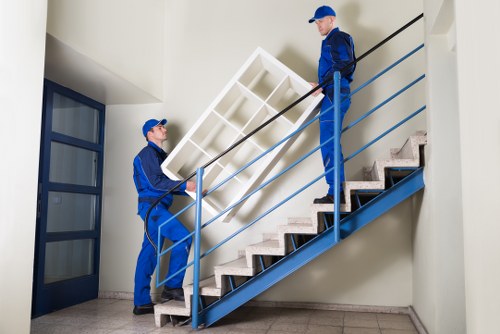
A well-run commercial removals service should cover the stages that matter most to a business customer. The exact plan will vary depending on the size and complexity of the move, but most customers want support with packing, lifting, transport, and placement at the destination. The goal is not simply to move items from A to B, but to do it in a way that protects assets and saves time.
Typical inclusions may involve the careful handling of office furniture, boxed records, IT equipment, retail stock, shelving, filing cabinets, display units, and other workplace contents. For larger moves, the service may include dismantling and reassembly of desks, workstations, or modular furniture. If your business has specialist items, such as printers, servers, archive boxes, or delicate stock, those can be planned into the move with appropriate protection.
Many customers also need help with access management and move sequencing. That means deciding which items are loaded first, how fragile items are separated, where essential equipment should go in the new premises, and how to reduce downtime. A good commercial moving plan takes these details seriously because they affect how quickly your team can get back to work.
Common service elements
- Pre-move planning and route assessment
- Loading and unloading with suitable equipment
- Protective wrapping for furniture and sensitive items
- Transport between properties in Kennington and nearby areas
- Dismantling and reassembly of office furniture where needed
- Placement of items in the correct rooms or work zones
- Coordination around building access, lifts, and time restrictions
Some businesses also ask for assistance with packing materials, label systems, and the structured movement of departments. If you are moving in stages, this can be built into the plan so that the most essential parts of your operation are relocated first, while less urgent areas are managed later.
How commercial moves in Kennington are planned

Planning is one of the most important parts of any business relocation. Without a clear plan, even a short move can lead to confusion, damaged items, or avoidable delays. The first step is usually to understand the size of the business, the type of premises, the items being moved, and the timing required. A move for a small office in a converted building will be handled differently from a relocation for a busy retail unit or a shared workspace.
Once the details are clear, the move can be shaped around access conditions and business priorities. In Kennington, that might involve arranging loading at a suitable time, checking whether parking or waiting space is needed, and considering whether the premises have stairs, narrow corridors, basement access, or lift restrictions. For businesses on busier roads or in tightly managed buildings, this planning stage can save a lot of trouble later.
Good planning also includes communication. Staff need to know what to pack, what must remain available until the last moment, and which items are critical for reopening. Managers often benefit from a staged checklist so that important documents, IT systems, and day-one essentials are easy to identify. Structured planning helps keep the move on track and reduces pressure on your team.
Useful planning points for customers
- Confirm the move date and expected time window early
- List fragile, high-value, or essential items separately
- Check access arrangements with landlords or building managers
- Identify any parking or loading limitations near the property
- Decide which staff members will be involved on the day
- Prepare a clear floor plan for the new premises if possible
For many businesses, the best move is one that feels almost routine by the time moving day arrives. That does not happen by accident; it happens because the details are considered in advance.
Why local businesses choose a Kennington-based moving team

There are several reasons why local customers often prefer a team that regularly works in and around Kennington. The first is simple familiarity. A local company is more likely to understand the streets, the pace of traffic, the layout of common commercial buildings, and the access issues that can affect a business move. That familiarity can help reduce delays and make the work feel more controlled.
The second reason is flexibility. A business move often needs to happen outside normal office hours, during a quieter period, or in stages that reduce disruption to customers and staff. A local service is often better placed to respond to those practical requirements and to coordinate around your schedule. Whether you are moving early in the day, over a weekend, or in an organised after-hours window, local logistics matter.
The third reason is accountability. When a team works in the area regularly, they tend to understand local expectations around professionalism, property care, and communication. That is particularly important for commercial customers who need movers to respect building rules, shared entrances, neighbouring businesses, and the condition of the premises. Reliable commercial movers should behave like a business partner, not just a transport provider.
Benefits of using a local commercial mover
- Better understanding of Kennington access and parking conditions
- More practical planning for nearby routes and timing
- Faster response to changing move requirements
- Local experience with varied property types
- More suitable support for nearby relocations to or from surrounding districts
If your business is comparing options, it is sensible to ask how the move will be managed, what level of support is available, and how the team will handle access constraints. A locally experienced mover should be able to explain the process clearly and confidently.
Commercial property types in Kennington and common move challenges
Kennington has a wide mix of business premises, and that variety affects how relocations are handled. Some businesses operate from purpose-built offices or modern commercial units, while others work from converted terraces, upper floors, mixed-use buildings, or shared workspaces. Each type of property brings different moving considerations.
For example, a ground-floor retail space may involve stock, shelving, display units, and limited back-of-house storage. A studio might have creative equipment, samples, lighting, and delicate materials that need organised packing. An office in an older building may have stair access, tight corners, and narrow doorways that require careful manoeuvring. A healthcare or professional practice may need a discreet, phased move with minimum interruption to client appointments.
These are the sorts of realities that affect business removals in Kennington. It is not just about the size of the job; it is about how the building works, what the business depends on, and how quickly the workplace needs to be operational again. The more clearly those factors are considered, the smoother the move tends to be.
Typical moving challenges
- Limited loading space outside the property
- Parking or waiting restrictions during busy periods
- Shared entrances and building access controls
- Stairs, lifts, and narrow interior routes
- Fragile equipment or confidential materials
- Time pressure to keep downtime low
These challenges are manageable with the right preparation. The key is to treat the move as a business process rather than a last-minute transport task.
Preparing your team and workspace for the move
Even if you are using a professional removal team, internal preparation still plays a major role in how successful the move will be. The clearer your business is about what needs to happen, the easier it is to pack, label, transport, and settle into the new location. A little structure before moving day can save a great deal of time afterwards.
One of the most helpful steps is to assign responsibility. If different people are responsible for IT, files, stock, or furniture, each area can be prepared properly. That prevents confusion and ensures important items are not overlooked. It also helps when the moving crew arrives, because the team can work with a clearer order of priorities.
Another important step is deciding what should move, what should be stored, and what can be disposed of or recycled before the relocation. Businesses often discover that a move is a good moment to reduce clutter, remove obsolete furniture, and streamline what goes into the new premises. Less unnecessary volume usually means a more efficient move and a cleaner start in the new space.
Preparation checklist
- Label boxes by department, room, or priority
- Back up and protect data before moving IT equipment
- Empty personal items from desks and storage units
- Separate essential items needed on the first day
- Inform staff about packing deadlines and access rules
- Measure key furniture and equipment for the new site
- Confirm any building requirements for lift protection or floor coverings
It is also worth planning how the business will operate during the transition. Some companies keep a skeleton setup running while others close for the move day. The best approach depends on your premises, your customer commitments, and the amount of equipment involved.
What affects the cost of a commercial move
Commercial move pricing can vary because no two relocations are the same. Businesses want a fair quote that reflects the actual work involved, not a one-size-fits-all estimate that ignores the details. The main cost factors usually include the size of the move, the number of items, the distance between premises, and the complexity of access at both locations.
For example, a move involving one compact office with straightforward access will generally require less time and fewer resources than a larger relocation with multiple rooms, heavy furniture, specialist equipment, or restricted loading. If the move needs to happen outside normal hours or within a tight window, that can also affect the planning and labour required. Businesses in Kennington with difficult access, upper-floor premises, or busy shared entrances should expect those conditions to influence the quote.
It is sensible to request a detailed assessment rather than focusing only on the headline figure. A clear quote should account for the practical realities of the move so that there are fewer surprises later. Transparent pricing factors help businesses compare services more fairly and make better decisions.
Common pricing factors
- Volume and type of items being moved
- Distance between the old and new premises
- Access restrictions, stairs, or lift use
- Need for dismantling and reassembly
- Packaging requirements for fragile or specialist items
- Timing, scheduling, and out-of-hours arrangements
- Additional support for staged or multi-stop relocations
If you are comparing commercial moving services in Kennington, ask what is included and what assumptions the quote is based on. That makes it easier to understand the overall value and avoid unexpected complications.
Areas covered around Kennington
Many businesses moving in Kennington also need support across nearby areas, especially when relocating within South London or shifting to a different part of central London. A local team can usually plan moves not only within Kennington itself, but also across surrounding neighbourhoods where commercial and residential streets meet busy transport corridors.
Nearby areas commonly involved in business relocations include Oval, Lambeth, Vauxhall, Elephant and Castle, Walworth, Stockwell, and parts of Waterloo and south of the river. These locations may present different access and parking conditions, but they are all within practical reach of a local commercial removals service familiar with the area.
For customers with premises spread across multiple sites, it can also be useful to coordinate staged relocations between nearby locations. This is common for expanding businesses, shared offices, and organisations moving staff or equipment in phases. The right moving plan helps each stage run smoothly without interrupting the wider operation more than necessary.
How to make a commercial move less disruptive
One of the biggest concerns for business customers is downtime. Whether you operate a customer-facing shop or a behind-the-scenes office, disruption can affect productivity, appointments, and revenue. The good news is that many moves can be managed in ways that reduce interruption, provided the timing and packing are organised carefully.
Moving critical items first, protecting essential systems, and separating high-priority workstations can help your business reopen sooner. Some businesses choose to relocate in phases, moving non-essential items before the final transfer of desks, records, and equipment. Others prefer a single, carefully timed move with everything loaded and unloaded in a strict sequence. The best option depends on the business model and the layout of the old and new premises.
Clear instructions make a major difference here. If the team knows what stays accessible until the end, what needs to be first off the vehicle, and what should be placed in each room, the move can be completed more efficiently and with less confusion on arrival.
Practical ways to reduce downtime
- Move outside peak working hours where possible
- Keep a small operational kit for day-one essentials
- Label cables, screens, and office equipment clearly
- Prepare the new space before furniture arrives
- Keep staff informed of the move sequence
- Assign one person to make quick decisions on the day
The smoother the handover from old premises to new premises, the quicker your team can return to normal work.
Frequently asked questions about commercial moves in Kennington
How far in advance should I book a business move?
It is wise to book as early as possible, especially if your move must fit around building access rules, staff availability, or a specific deadline. Early booking gives more time to plan, assess the premises, and prepare your team. If your move is urgent, it is still worth making an enquiry because a suitable solution may still be available.
Can you move offices in stages?
Yes, staged office relocation is often a practical option. This can be useful for businesses that need to stay partially operational while moving. Staged moves can also help with larger spaces, complex setups, or companies that want to relocate departments one at a time.
Do commercial moves include packing?
That depends on the service arrangement. Some businesses prefer to pack internally, while others want support with packing fragile items, office contents, stock, or equipment. The right approach usually depends on how much time you have, how sensitive the items are, and how much responsibility you want to keep in-house.
What if my building has restricted access?
Restricted access is common in commercial properties, especially in central and south London. The move should be planned around those restrictions, including lift bookings, loading windows, security arrangements, and any required permissions. A move team familiar with the area can help coordinate around these conditions.
Can you help with furniture dismantling and reassembly?
Many commercial moves require some level of dismantling and reassembly, particularly for desks, workstations, shelving, and modular office furniture. This is often easier than trying to move large items in one piece, especially when doors, corridors, or stairways are tight.
What should I do with confidential files or sensitive items?
Confidential materials should be packed and labelled carefully, with clear responsibility assigned to the right person in your organisation. If you have sensitive paperwork, records, or devices, it is sensible to plan their movement separately so they are not mixed with general office contents.
Why this service suits real businesses in Kennington
Every business move has a practical purpose: to keep the organisation moving forward while relocating to a better workspace, a larger site, or a more efficient setup. That is why a service for commercial moves in Kennington should be built around real local conditions, not generic assumptions. Businesses here need movers who understand older buildings, mixed-use developments, traffic patterns, parking issues, and the day-to-day realities of working in a busy London neighbourhood.
It also needs to be a service that respects the fact that commercial customers are not only moving objects; they are moving operations, schedules, staff routines, and sometimes customer service itself. A thoughtful, well-organised removal process can support all of that. Whether the job involves a small office, a retail environment, or a multi-room business relocation, careful planning and responsive service are what help the day go well.
If you are preparing for an office move, shop relocation, or workplace transfer in Kennington or a nearby district, it makes sense to speak to a local team early. Request a free quote, share the details of your premises, and ask how the move can be organised around your business needs. Book your service now if you want a clear, practical plan for moving day and a team that understands the local area.
Final thoughts for local customers
Moving a business is a big operational step, but it does not have to be a chaotic one. With the right planning, the right equipment, and the right local knowledge, your relocation can be managed in a way that protects your assets and reduces unnecessary disruption. That is especially important in Kennington, where access, building layouts, and parking conditions can quickly affect how smooth a move feels.
If you are comparing options for commercial removals, think about more than transport alone. Look for a service that understands route planning, access issues, furniture handling, packing needs, and the realities of business downtime. When those details are taken seriously, the move becomes far more manageable for everyone involved.
Contact us today to discuss your commercial relocation needs in Kennington and nearby areas. Whether you need support with a small office, a busy retail unit, or a larger business move, the right local approach can help you get there with confidence.